

Our Story
For more than 5,000 years, the Sugpiaq people—also known as Alutiiq—have lived, thrived, and passed down rich traditions along the shorelines and islands of Prince William Sound, the Kenai Peninsula, and the lower reaches of the Copper River Delta. These lands and waters are not merely the backdrop of Sugpiaq life, they are the heartbeat of a culture rooted in resilience, adaptation, and deep respect for the natural world.
Our ancestors were expert mariners, hunters, and fishermen who navigated the Gulf of Alaska in skin-covered bidarkas (kayaks), built thriving villages along the coast and a complex cultural and spiritual relationship with the land and sea. Our Sugt’stun language, ceremonies, subsistence practices, and oral traditions shaped a world that honored community, balance, and the wisdom of Elders. Despite the profound changes brought by contact, colonization, and adversity, the Sugpiaq people have held fast to their identity, preserving and revitalizing their ways of life into the present day.
Our People
The Chugach region is home primarily to the Sugpiaq and Eyak peoples, whose deep ties to the land and sea define our heritage. Over generations, our ancestors also built enduring relationships with the Tlingit to the east, the Athabascans to the north, and the Aleut (Unangax̂) to the west. We were likewise connected with the Sugpiaq of Kodiak and the Alaska Peninsula, bound together by trade, proximity, and shared language and traditions. These connections reflect a living heritage that continues to shape our identity today.
Sugpiaq | Alutiiq
The Sugpiaq, also known as Alutiiq, are the Indigenous people of coastal southcentral Alaska, including Prince William Sound and the Kodiak Archipelago. Traditionally expert seafarers, hunters, and gatherers, the Sugpiaq built complex societies around ocean and land resources. Their culture blends resilience, artistry, and deep spiritual ties to the sea and land that sustain them.
Eyak
The Eyak people are Indigenous to the Copper River Delta near present-day Cordova. Though smaller in number, their language and culture reflect a unique identity tied to rich fishing grounds and river systems. Eyak traditions emphasize balance with nature, subsistence practices, and ancestral knowledge, which continue to be honored by descendants and preserved through revitalization efforts.
Tlingit
The Tlingit live along the Southeast Alaska coast and have long interacted with neighboring Sugpiaq communities. Renowned for their clan system, oral traditions, and artistic mastery in carving and weaving, the Tlingit have maintained a strong cultural presence through centuries of change. Their influence extends through trade, alliances, and kinship ties that link them to the Chugach region.
Athabascan
The Athabascan peoples inhabit Alaska’s vast interior north of the Chugach region. Traditionally semi-nomadic, they followed seasonal migrations for hunting, fishing, and gathering. Known for their birchbark crafts, snowshoe-making, and deep knowledge of rivers and forests, Athabascan culture emphasizes family, respect for nature, and storytelling. Their ties with our people reflect longstanding trade and kinship connections.
Chugach Nonprofits
At Chugach, we believe success is measured not just in profit, but in purpose. Our mission extends far beyond the bottom line to providing for our people, strengthening our communities, and safeguarding our cultural legacy for generations to come. That’s why Chugach has established and supports a number of nonprofit organizations and mission-driven entities dedicated solely to advancing the well-being of our shareholders and descendants. From investing in education and workforce development, to preserving our language, traditions, and ancestral knowledge, these efforts ensure that the spirit of our people endures.
Cultural Programs
Discover how we honor, protect, and celebrate the rich cultural traditions of the Chugach region. Our commitment is to safeguarding heritage and sharing the wisdom of our Elders, ensuring that these vibrant customs continue to inspire and connect our community for generations to come.
Chugach is committed to honoring and preserving the cultural heritage of the region’s Alaska Native peoples through the nonprofit Chugach Heritage Foundation. Supported by a $30 million endowment from Chugach, the Foundation provides scholarships and cultural programs to Chugach shareholders and descendants, strengthening the transmission of traditional knowledge and ensuring the wisdom of Elders and Chugach traditions endure for future generations.
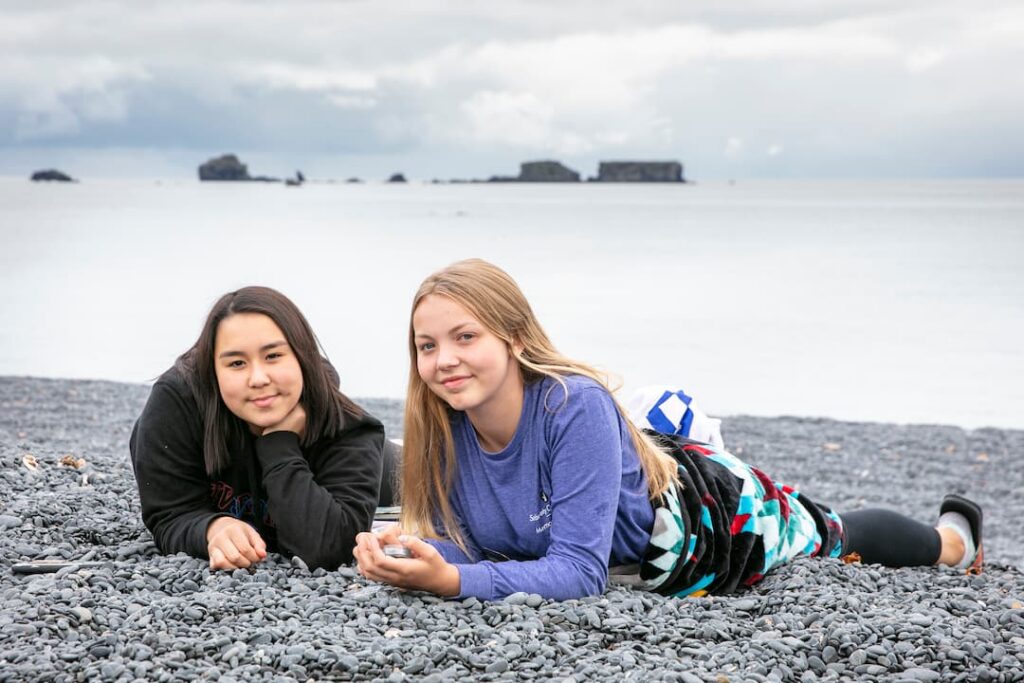
Since 1995, Nuuciq Spirit Camp has brought the Chugach community together on ancestral lands in Prince William Sound to learn lifeways, language, and history. Originally created and managed by Chugach’s Cultural Resources Department, the two-week program transferred to the Chugach Heritage Foundation in 2016, with both organizations continuing to partner each year to connect our people with their cultural heritage.
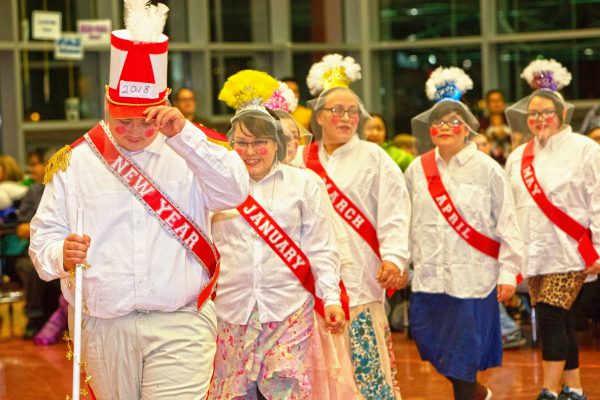
Each January, the Chugach Heritage Foundation hosts its annual Russian New Year Celebration in Anchorage, drawing around 300 participants for potluck, live music and dancing, traditional performances, and a silent auction. The event reflects a cultural legacy dating to the 18th century, when Russian traders and soldiers arrived in Alaska and wove their observances, foods, and traditions into existing Native customs. Now celebrating more than two decades, this beloved public gathering unites Alaska Native, Russian Orthodox, and broader Anchorage communities during the darkest time of year to honor and practice those shared traditions.
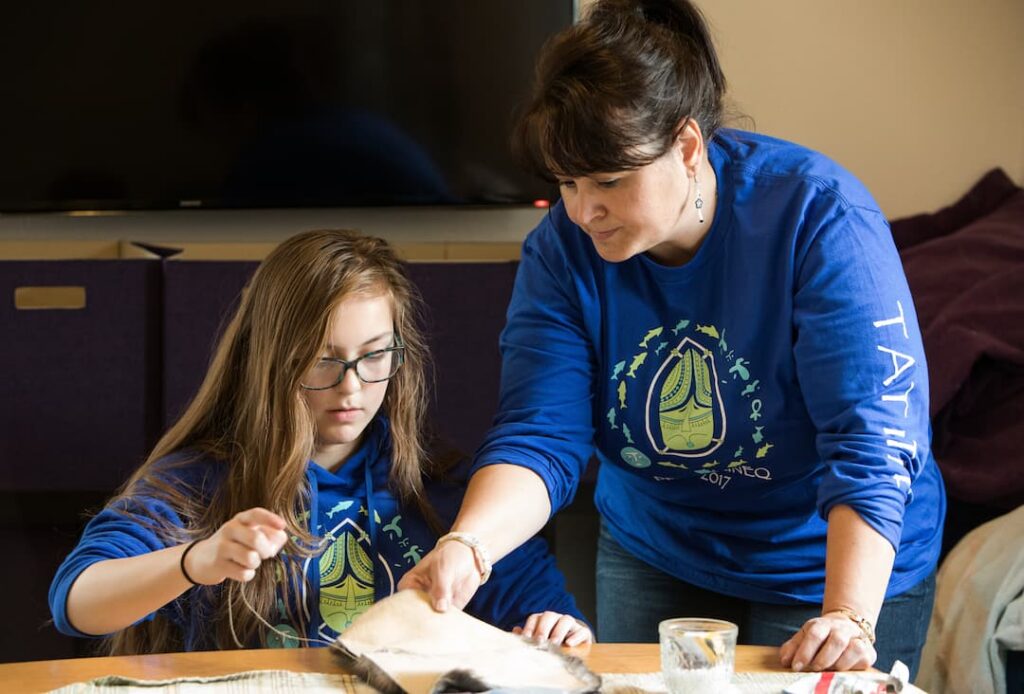
Chugach Heritage Foundation offers in-person and virtual cultural classes for Chugach shareholders and descendants to preserve and promote our cultural heritage and traditional skillsets.
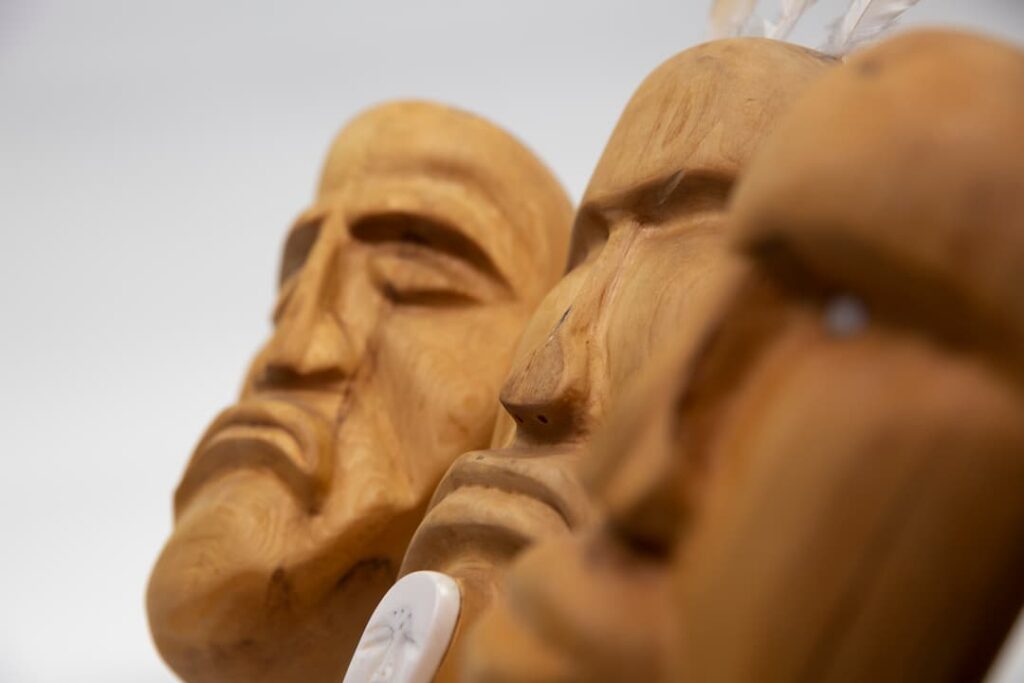
The Chugach Museum is envisioned as a 12,822-square-foot, year-round cultural and archaeological center in Midtown Anchorage—part of the “Village in the City” development—designed to preserve, co-steward, and exhibit over 16,000 archaeological and archival objects from the Chugach region, while providing participatory exhibitions, workshops, and community programming to share Chugach heritage locally and beyond.
Our History
Chugach’s history is one of resilience, stewardship, and long-term vision. From our founding under the Alaska Native Claims Settlement Act to the diverse enterprise we are today, each chapter reflects a commitment to our people, our lands, and building opportunity across generations. This timeline traces the milestones that have shaped Chugach and continue to guide our future.
1971-72

Chugach Natives, Inc. is incorporated
The Alaska Native Claims Settlement Act (ANCSA) is signed into law by President Richard Nixon. Shortly after, Chugach Natives. Inc. is established by original founders Cecil Barnes, Walter Meganack, John Borodkin, Vincent Kvasnikoff and Mary Gordaoff.


News & Community Impact
Stay informed with the latest updates from Chugach, including company news, shareholder stories, and community initiatives.

