

Overview
Constitutionally Sound
ANC participation is a political classification rooted in Federal Indian law and Congress’ trust responsibility.
Mission Outcomes First
8(a) enables faster, lower-risk acquisition that helps agencies field capability months sooner while protecting taxpayers.
Stewardship & Stability
Profit caps and performance guardrails keep costs in check; ANCs provide continuity because they cannot be sold.
National Security Value
Native-owned 8(a) firms like Chugach deliver critical, time-sensitive work for defense and other mission partners.
A Deliberate Tool for Native Economic Development
In 1988, Congress included Alaska Native Corporations, Indian Tribes, and Native Hawaiian Organizations, to:
What 8(a) Delivers for Federal Customers
Myth vs. Fact: Setting the Record Straight
Empowering Small Businesses
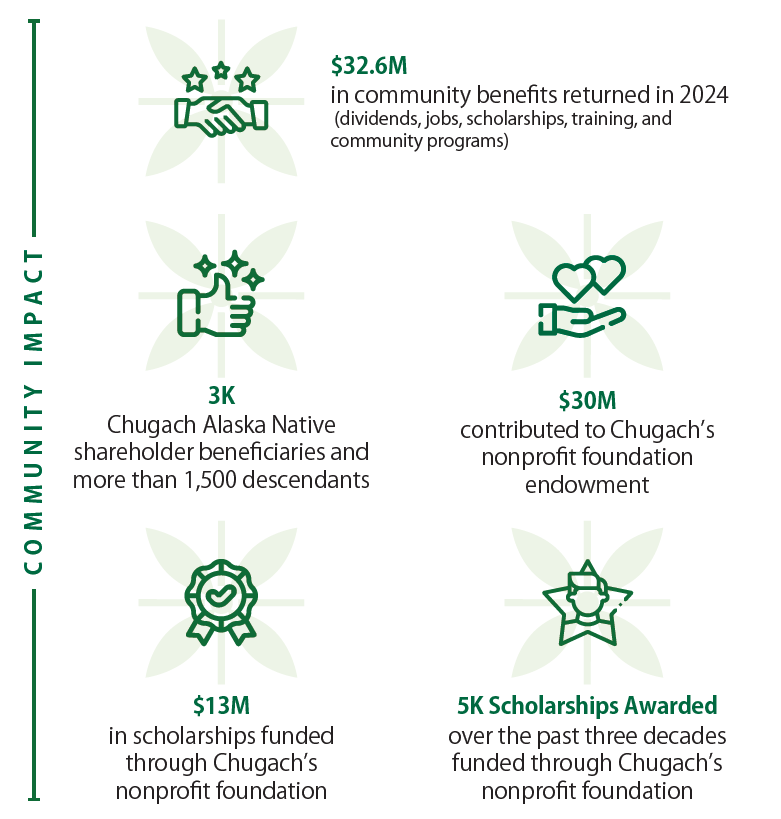
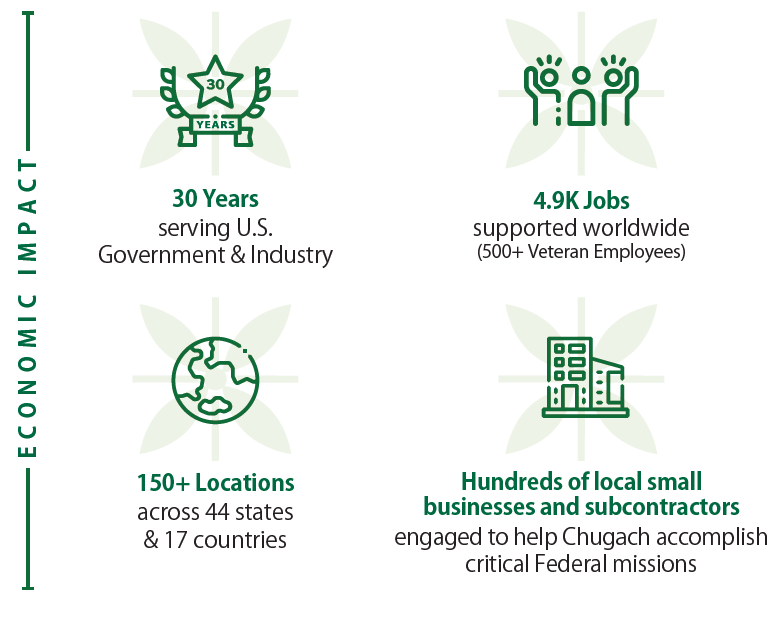
Chugach By the Numbers
Working as Intended:
8(a) In Action IndoPacific (Guam, Fort Greely, Midway, Hawaii) — Strategic Infrastructure in Austere Environments
Across INDOPACOM, Chugach operates at scale in remote, corrosive, and climatically extreme settings—managing housing and Gateway Inns on Guam since 2013, executing construction/renovations, modular solutions, perimeter security, and warehousing strategies that cut lead times and overcome island logistics. At Fort Greely, Chugach sustains sub-Arctic base operations that underpin ballistic missile defense, using a CMMS to schedule maintenance across 20,000+ assets to minimize downtime. This breadth—extending to NSA site maintenance in Hawaii and longstanding operations on Midway Atoll—reduces bottlenecks, sustains quality of life for deployed forces, and strengthens forward presence and deterrence. It showcases 8(a) partners’ ability to bring reliable, climate adapted solutions and rapid response where the mission stakes and distances are highest.
Working as Intended:
8(a) In ActionIndoPacific (Guam, Fort Greely, Midway, Hawaii) — Strategic Infrastructure in Austere EnvironmentsAcross INDOPACOM, Chugach operates at scale in remote, corrosive, and climatically extreme settings—managing housing and Gateway Inns on Guam since 2013, executing construction/renovations, modular solutions, perimeter security, and warehousing strategies that cut lead times and overcome island logistics. At Fort Greely, Chugach sustains sub-Arctic base operations that underpin ballistic missile defense, using a CMMS to schedule maintenance across 20,000+ assets to minimize downtime. This breadth—extending to NSA site maintenance in Hawaii and longstanding operations on Midway Atoll—reduces bottlenecks, sustains quality of life for deployed forces, and strengthens forward presence and deterrence. It showcases 8(a) partners’ ability to bring reliable, climate adapted solutions and rapid response where the mission stakes and distances are highest.