
Whittier: A Crossroads of Culture, Trade, and History
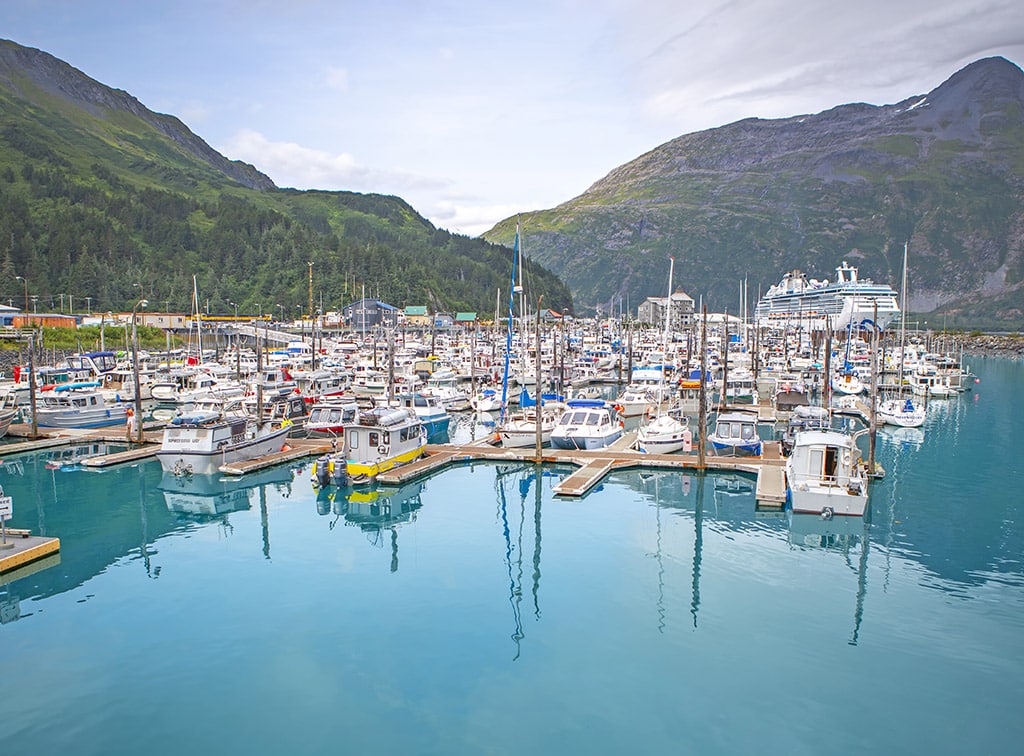
Whittier, Alaska, located on the western edge of Prince William Sound, holds deep historical and cultural significance for the Chugach people, the region’s original inhabitants. For generations, the Chugach used the Whittier area as a vital portage route between Prince William Sound and Turnagain Arm. This passageway allowed for trade, seasonal migration, and access to inland resources, reinforcing Whittier’s role as a key connector within their traditional transportation network.
The area’s strategic importance was later recognized by Russian and American explorers, followed by miners during the Alaska Gold Rush, who also relied on the route to penetrate deeper into Alaska’s interior. Its natural geography—surrounded by steep mountains and often cloaked in fog—offered both protection and seclusion, making it appealing for varied uses across centuries.
During World War II, the U.S. Army constructed a military base in Whittier, drawn by its deep-water, ice-free port and natural defensibility. The completion of the railroad to Portage in 1943 transformed Whittier into a critical military logistics hub, enabling the movement of cargo and personnel.
Despite waves of Western expansion, military development, and natural disasters such as the 1964 Good Friday Earthquake, the Chugach people have maintained strong cultural ties to the region. Today, they continue to play an active role in shaping Whittier’s social and economic future.
Modern Whittier serves as a year-round transportation hub and gateway to Prince William Sound. Its most distinctive feature is Begich Towers, where most residents live—reflecting a community as unique as its history.