

A Land of Many Peoples: The Origins of Seward
The aboriginal Qutekcak (pronounced K’toochek) Native Tribe inhabited the area in and around present-day Seward, Alaska, located on the sheltered northern tip of Resurrection Bay, which opens into the Gulf of Alaska. The word Qutekcak is derived from the Alutiiq language and translates to “Big Beach”.
During the early 19th century, the establishment of a Russian shipbuilding settlement at what is now Seward led to the incorporation of other Alaska Native peoples into the local community through both voluntary labor and coerced service. Following the U.S. purchase of Alaska in 1867, commercial development brought an additional influx of settlers, contributing further to the region’s cultural blending.
The 1890s gold rush brought miners to the area, who established an encampment at the head of the overland trail to Hope and Sunrise. In 1903, the Alaska Railroad formalized the founding of the town of Seward by purchasing land from Mary Lowell—who was of mixed Russian and Alaska Native heritage—and constructing the terminus over an existing Native village site.
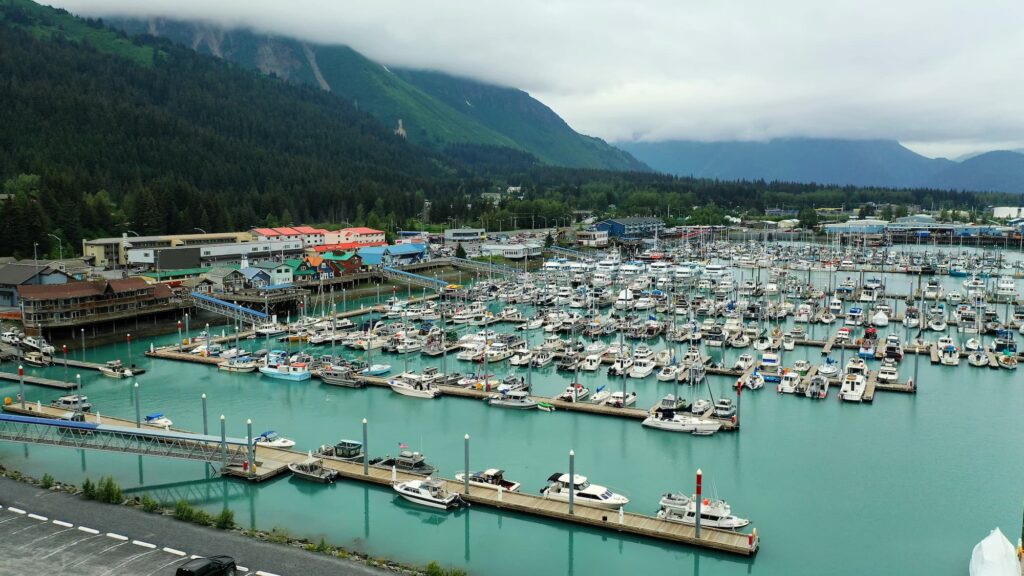 The Seward harbor.
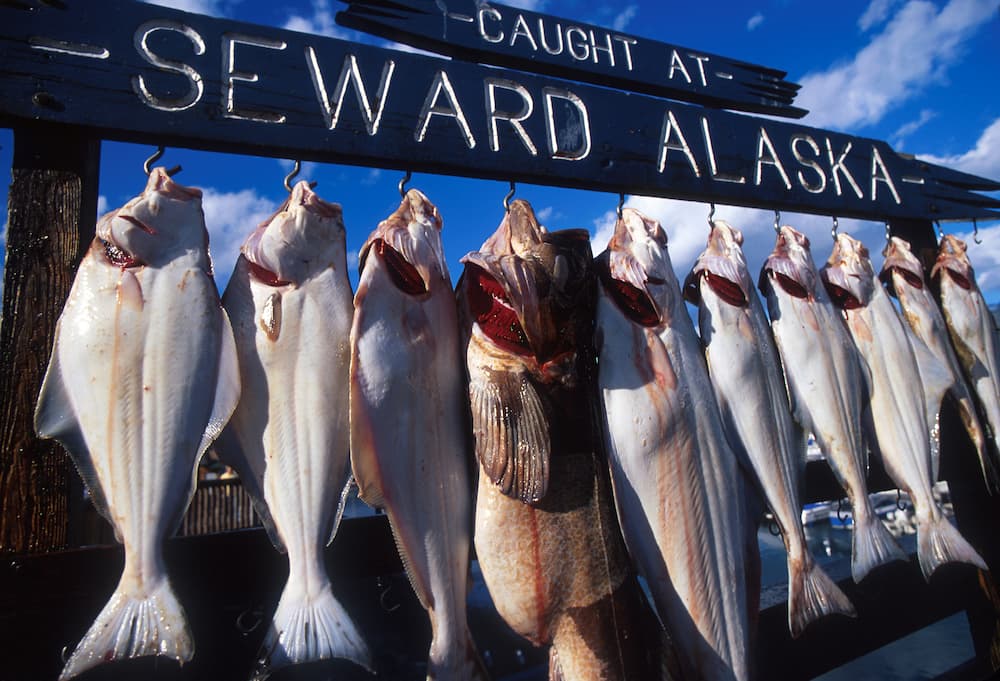 The Chugach people thrived on the Kenai Peninsula, living off of the bounty of the sea. Today, the sea still provides, making Seward a major tourist destination.
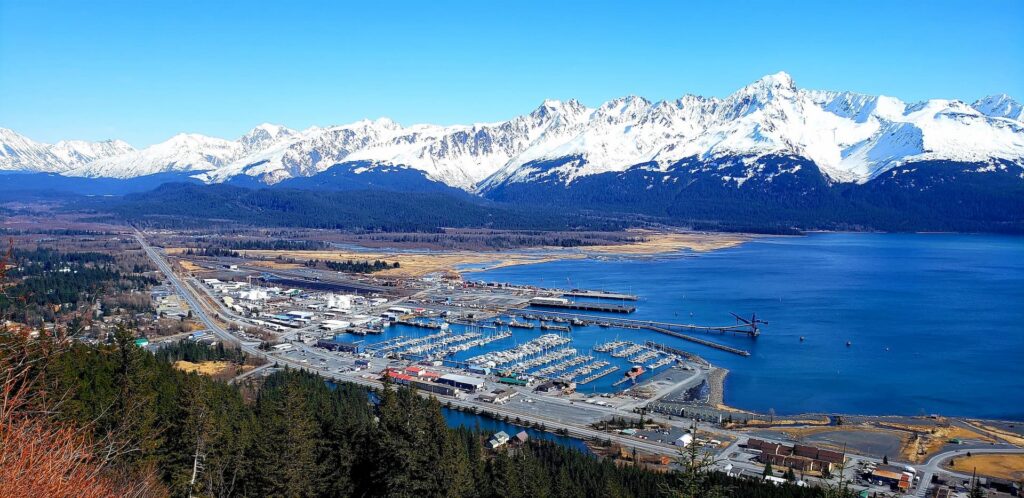 The view of Seward from Mount Marathon.