

Nanwalek: History, Culture, and Community
Nanwalek, meaning “place by the lagoon” in Sugt’stun, is a traditional Alutiiq village located on the southern tip of the Kenai Peninsula, accessible only by air or water. With a population of just over 300 residents, Nanwalek remains a vibrant community rooted in subsistence, culture, and a deep connection to ancestral lands and waters.
For thousands of years, the Sugpiaq people—also known as Alutiiq—inhabited the coastal regions of the Kenai Peninsula, including the areas now known as Kachemak Bay and the outer coast. These communities were highly skilled maritime hunters and gatherers, maintaining complex knowledge of the ocean, tides, and seasons, which is reflected in their language, traditions, and artistry.
Russian contact in the late 1700s brought profound changes to the region. The Russian Orthodox faith was introduced and remains a central part of community life in Nanwalek today. During the 19th century, the Russians relocated many coastal Sugpiaq people to consolidated villages like Nanwalek (formerly known as Alexandrovsk), as they expanded the sea otter fur trade.
Despite colonization, forced relocations, and economic changes over the centuries, Nanwalek has remained resilient. The community continues to practice subsistence hunting and fishing, pass down traditional knowledge, and celebrate Alutiiq language and culture.
Today, Nanwalek stands as a testament to endurance and adaptation. It faces ongoing challenges due to its remote location, but it continues to thrive through strong family ties, cultural preservation, and a deep spiritual relationship with the surrounding land and sea.
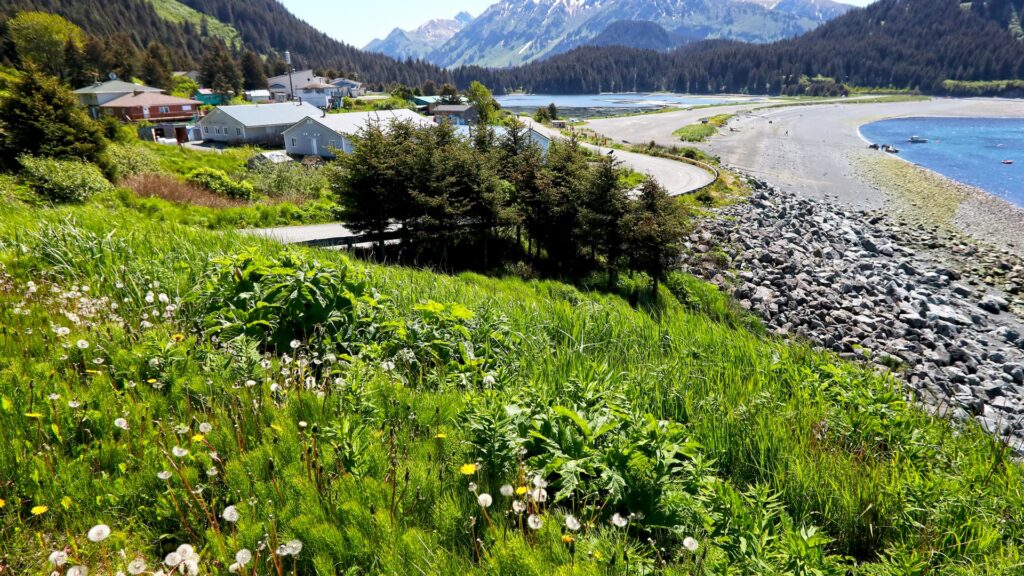 In the early 1990s, the village changed its name from English Bay to its original name of Nanwalek., which means “place by a lagoon”.
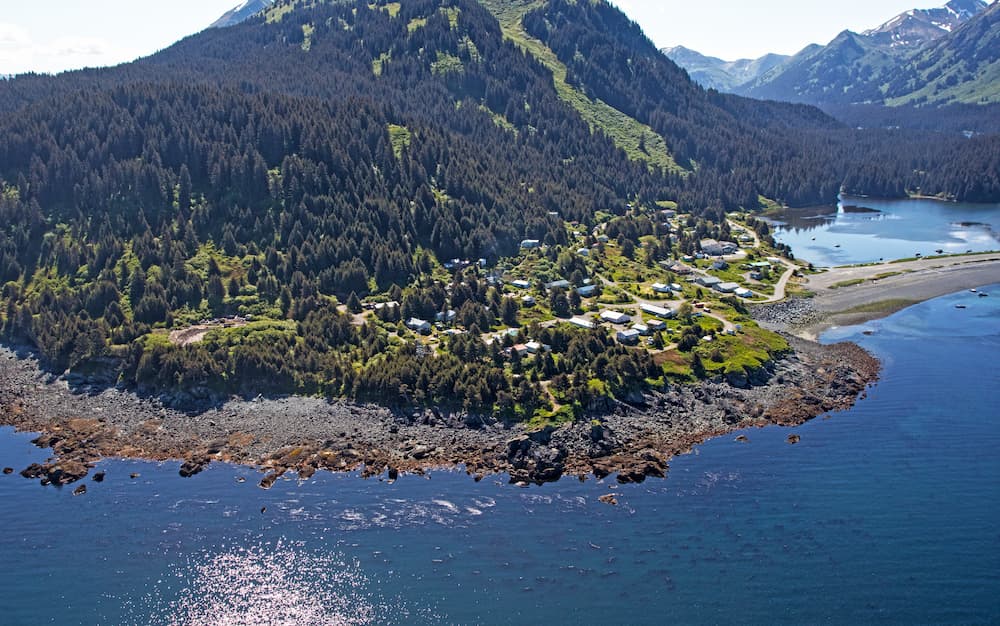 An aerial view of Nanwalek
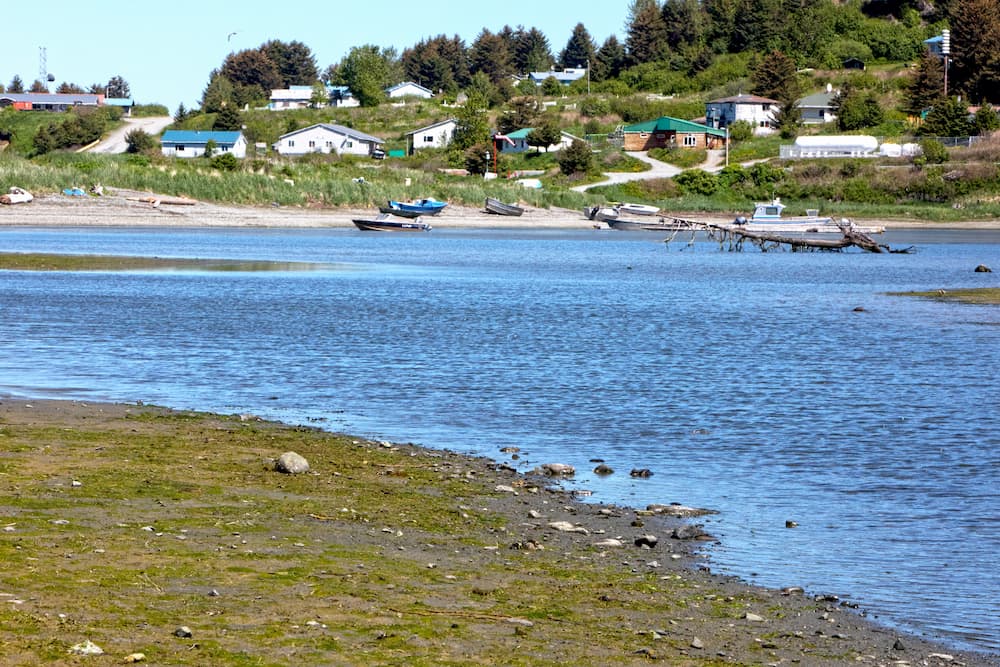 The village of Nanwalek located on the southtern tip of the Kenai Peninsula.